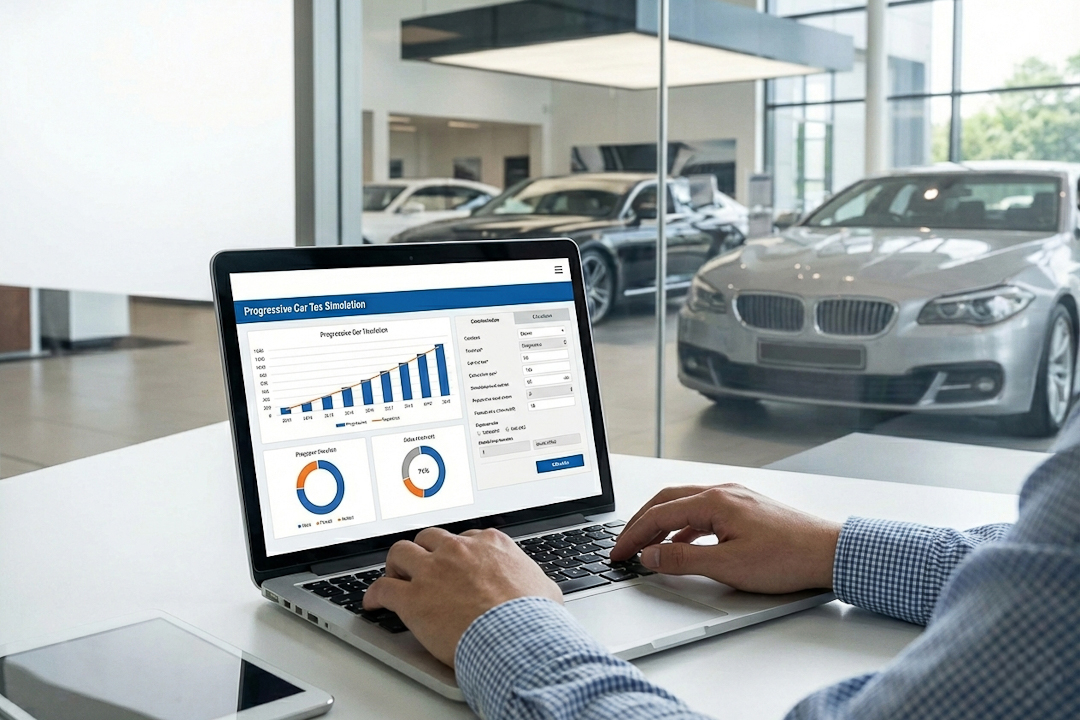
Understanding Progressive Car Tax and Calculation Simulation
Owning a private vehicle certainly makes mobility more practical. But behind that convenience, there is a routine obligation that must be taken into account from the start, namely motor vehicle tax. The amount of this tax varies, depending on the type and number of vehicles you own. One component that often surprises car owners is progressive tax.
Before deciding to buy a second or third car, it is important to understand how the progressive tax system works and how to calculate it. This will prevent miscalculations in the future.
What is Progressive Car Tax?
Progressive tax is a tax scheme where the rate increases as the number of taxable objects increases. In the context of vehicles, this means that the second, third, and subsequent cars will be subject to higher taxes than the first car.
The amount of tax is determined based on the value of the vehicle and the number of vehicles registered under the same owner's name and address. So, the more vehicles you own, the higher the tax you have to pay each year.
In Indonesia, progressive vehicle tax is included in the Motor Vehicle Tax (PKB) category and is regulated by local governments. This rule is implemented as an effort to control the number of vehicles while creating fairness in the taxation system.
It should be noted that vehicle ownership is also grouped based on type, ranging from two-wheeled, four-wheeled, to vehicles with more than four wheels. However, if you own one car and one truck under the same name, these vehicles are still counted as your first ownership, so they are not subject to the progressive tax rate.
Progressive Car Tax Rates
Progressive tax rates are determined based on the order of vehicles owned under the same name and address. Although the rates may vary slightly in each region, the general scheme is as follows:
- First vehicle: 2%
- Second vehicle: 2.5%
- Third vehicle: 3%
- Subsequent vehicles: gradually increasing up to a maximum of 10%
These rates are calculated based on the Motor Vehicle Sales Value (NJKB) and added to the SWDKLLJ to obtain the total annual tax. In essence, the more cars you have in your garage, the higher the tax you will have to pay.
How to Calculate Progressive Car Tax
To determine the amount of progressive tax, there are two main components you need to know:
1. Motor Vehicle Sales Value (NJKB)
NJKB is the official value of a vehicle set by the Regional Revenue Agency based on data from the Brand Holder Agent (APM). You can calculate this value from the PKB listed on your vehicle registration certificate (STNK).
The formula is:
NJKB = (PKB / 2) x 100
2. Vehicle Usage Weight
This weight reflects the impact of the vehicle on road conditions and is usually expressed in a coefficient (minimum value of one).
Once the NJKB is known, the next step is to multiply the NJKB by the progressive tax rate according to the vehicle category, then add the SWDKLLJ.
Example of Progressive Car Tax Calculation
For example, you have three cars with a PKB value of Rp 1,000,000 on the STNK and an SWDKLLJ of Rp 100,000 per vehicle.
Calculate NJKB:
(NJKB) = (Rp 1,000,000 / 2) x 100 = Rp 50,000,000
First Car
PKB: Rp 50,000,000 x 2% = Rp 1,000,000
SWDKLLJ: IDR 100,000
Total Tax: IDR 1,100,000
Second Car
PKB: IDR 50,000,000 x 2.5% = IDR 1,250,000
SWDKLLJ: IDR 100,000
Total Tax: IDR 1,350,000
Third Car
PKB: IDR 50,000,000 x 3% = IDR 1,500,000
SWDKLLJ: IDR 100,000
Total Tax: IDR 1,600,000
This scheme will continue with increasing rates until it reaches a maximum limit of 10%.
Conclusion
Progressive car tax is an important matter that every vehicle owner must understand. The more cars you own under one name and address, the greater your tax liability. By understanding the rates, NJKB, and SWDKLLJ calculations, you can estimate your annual tax costs more accurately and make wiser decisions before adding vehicles to your garage.
Indonesia 🇮🇩
Mengenal Pajak Progresif Mobil dan Simulasi Perhitungannya
Punya kendaraan pribadi memang bikin mobilitas makin praktis. Tapi di balik kenyamanan itu, ada kewajiban rutin yang wajib diperhitungkan sejak awal, yaitu pajak kendaraan bermotor. Besarnya pajak ini berbeda-beda, tergantung jenis dan jumlah kendaraan yang kamu miliki. Salah satu komponen yang sering bikin pemilik mobil kaget adalah pajak progresif.
Sebelum memutuskan beli mobil kedua atau ketiga, penting untuk paham bagaimana sistem pajak progresif bekerja dan bagaimana cara menghitungnya. Biar nggak salah hitung di kemudian hari.
Apa Itu Pajak Progresif Mobil?
Pajak progresif adalah skema pajak yang tarifnya meningkat seiring bertambahnya jumlah objek pajak. Dalam konteks kendaraan, artinya mobil kedua, ketiga, dan seterusnya akan dikenakan pajak lebih tinggi dibanding mobil pertama.
Besaran pajak ini ditentukan berdasarkan nilai kendaraan dan jumlah kendaraan yang terdaftar atas nama dan alamat pemilik yang sama. Jadi, semakin banyak kendaraan dalam satu kepemilikan, semakin besar pula pajak yang harus kamu bayar setiap tahun.
Di Indonesia, pajak progresif kendaraan termasuk dalam kategori Pajak Kendaraan Bermotor (PKB) dan diatur oleh pemerintah daerah. Aturan ini diterapkan sebagai upaya pengendalian jumlah kendaraan sekaligus menciptakan keadilan dalam sistem perpajakan.
Perlu dicatat, kepemilikan kendaraan juga dikelompokkan berdasarkan jenisnya,mulai dari roda dua, roda empat, hingga kendaraan dengan roda lebih dari empat. Namun, jika kamu punya satu mobil dan satu truk atas nama yang sama, kendaraan tersebut masih dihitung sebagai kepemilikan pertama, sehingga belum terkena tarif progresif lanjutan.
Tarif Pajak Progresif Mobil
Tarif pajak progresif ditentukan berdasarkan urutan kendaraan yang dimiliki dengan nama dan alamat yang sama. Meski besarannya bisa sedikit berbeda di tiap daerah, secara umum skemanya seperti ini:
- Kendaraan pertama: 2%
- Kendaraan kedua: 2,5%
- Kendaraan ketiga: 3%
- Kendaraan berikutnya: bertahap hingga maksimal 10%
Tarif tersebut dihitung dari Nilai Jual Kendaraan Bermotor (NJKB) dan ditambah SWDKLLJ untuk mendapatkan total pajak tahunan. Intinya, makin banyak mobil di garasi, makin besar juga angka pajak yang harus kamu siapkan.
Cara Menghitung Pajak Progresif Mobil
Untuk mengetahui besaran pajak progresif, ada dua komponen utama yang wajib kamu ketahui:
1. Nilai Jual Kendaraan Bermotor (NJKB)
NJKB adalah nilai resmi kendaraan yang ditetapkan oleh Dispenda berdasarkan data dari Agen Pemegang Merek (APM). Nilai ini bisa kamu hitung dari PKB yang tertera di STNK.
Rumusnya:
NJKB = (PKB / 2) x 100
2. Bobot Penggunaan Kendaraan
Bobot ini mencerminkan dampak kendaraan terhadap kondisi jalan dan biasanya dinyatakan dalam koefisien (minimal bernilai satu).
Setelah NJKB diketahui, langkah berikutnya adalah mengalikan NJKB dengan tarif pajak progresif sesuai urutan kendaraan, lalu menambahkan SWDKLLJ.
Contoh Perhitungan Pajak Progresif Mobil
Misalnya kamu memiliki tiga mobil dengan nilai PKB di STNK sebesar Rp 1.000.000 dan SWDKLLJ Rp 100.000 per kendaraan.
Hitung NJKB:
(NJKB) = (Rp 1.000.000 / 2) x 100 = Rp 50.000.000
Mobil Pertama
PKB: Rp 50.000.000 x 2% = Rp 1.000.000
SWDKLLJ: Rp 100.000
Total Pajak: Rp 1.100.000
Mobil Kedua
PKB: Rp 50.000.000 x 2,5% = Rp 1.250.000
SWDKLLJ: Rp 100.000
Total Pajak: Rp 1.350.000
Mobil Ketiga
PKB: Rp 50.000.000 x 3% = Rp 1.500.000
SWDKLLJ: Rp 100.000
Total Pajak: Rp 1.600.000
Skema ini akan terus berlanjut dengan tarif yang meningkat hingga mencapai batas maksimal 10%.
Kesimpulan
Pajak progresif mobil adalah hal penting yang wajib dipahami setiap pemilik kendaraan. Semakin banyak mobil yang kamu miliki atas satu nama dan alamat, semakin besar pula kewajiban pajaknya. Dengan memahami tarif, NJKB, hingga perhitungan SWDKLLJ, kamu bisa memperkirakan biaya pajak tahunan secara lebih akurat dan mengambil keputusan yang lebih bijak sebelum menambah kendaraan di garasi.
Share